
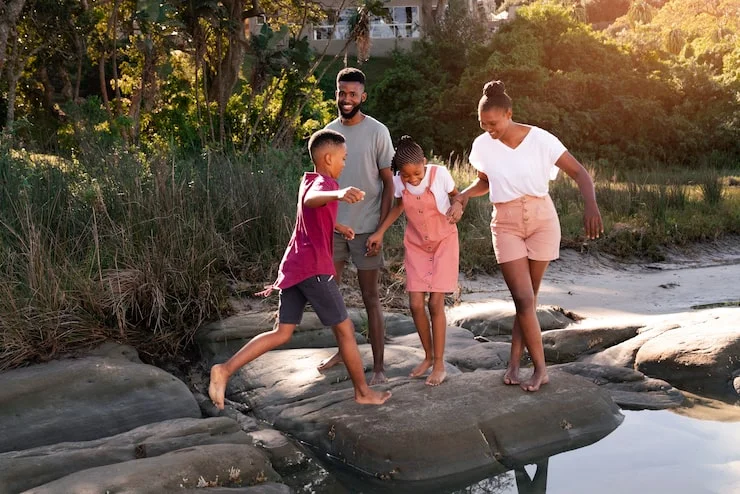
Luxury family travel is not about marble lobbies and silent corridors. It is about having the right space, the right support, and the right experiences so that everyone—parents, kids, grandparents—comes home feeling like they actually had a holiday.
That distinction matters more than most guides admit. A five-star hotel that frowns at children splashing in the pool is not a luxury family resort. A villa with a private chef who understands a picky eight-year-old is. The difference is design, not price tag.
This guide covers what luxury family travel actually looks like in practice, which destinations deliver on the promise, and how to plan a trip that does not collapse under its own luxury vacation ideas for families.
What Makes a Family Vacation Truly Luxurious?

The answer is simpler than the travel industry usually admits: space, flexibility, and someone else handling the boring parts.
Space means a two-bedroom suite or a villa, not a hotel room with a rollaway bed wedged beside the minibar. Flexibility means dining when your toddler is hungry, not when the restaurant opens. And support means a kids' club that your child actually wants to attend, or a concierge who can arrange a babysitter so the adults can eat dinner without cutting anyone's food.
Luxury travel advisors report that multigenerational trips—where grandparents, parents, and children travel together—have become one of the biggest trends in the sector . That changes the math. You are no longer booking for two adults and two kids. You are booking for a group with wildly different energy levels and bedtimes.
The properties that get this right tend to share a few traits. They offer adjoining rooms or standalone villas. They have pools shallow enough for small children and deep enough for teenagers. Their kids' clubs are staffed by people who seem genuinely pleased to be there. And they do not treat children as a problem to be managed.
Rosewood Mandarina in Mexico, for example, opened in 2025 with two- and three-bedroom villas that include private plunge pools and butler service, plus a kids' club running beadwork and storytime sessions tied to local Wixárika culture . That is the model: luxury that does not require children to be invisible.
Read Also: Luxury Resorts In Coorg For Honeymoon
Destinations That Deliver for Families
Mexico's Pacific and Caribbean Coasts
Mexico has become a quiet powerhouse for luxury family travel, largely because the resorts have figured out how to serve both adults and children without compromise.
The St. Regis Kanai Resort on the Riviera Maya offers a dedicated family pool and suites designed for multigenerational groups, with a location close enough to Xcaret Park that you can spend a day in underground rivers and still make it back for dinner . The Park Hyatt Cabo Del Sol, which opened in December 2025, goes further into practical territory: highchairs, bottle sterilizers, play yards, and kids' menus are standard, not special requests .
What makes these properties work is not any single amenity. It is the absence of friction. You do not have to ask three times for a crib. You do not have to explain that your six-year-old will not eat truffle foam.
The Maldives, Minus the Honeymoon Cliché
The Maldives has a reputation problem: it looks, in photographs, like a place designed exclusively for couples who want to post one perfect picture and then never speak to another human being.
The InterContinental Maldives Maamunagau Resort quietly dismantles that assumption. Its kids' club for ages four to twelve is built inside a structure inspired by a traditional Maldivian fishing boat, and the programming leans into the environment rather than generic crafts. Teenagers get water sports and nature-focused activities. Family beach villas have private pools and direct shoreline access .
The snorkeling and dolphin watching are not babysitting distractions. They are the reason to go. The difference is that your children are welcome to experience them too.
The Caribbean Beyond the All-Inclusive
The Dominican Republic's Eden Roc Cap Cana holds two Michelin Keys, which is the kind of credential that usually signals a hushed, adult-oriented atmosphere. It is also, somewhat unexpectedly, one of the more thoughtful family properties in the region.
Villas come with private pools equipped with pool alarms—a small detail that matters enormously if you have a toddler who cannot swim. The Koko Kid's Club runs out of a treehouse-style space and includes a lifeguarded lagoon where children can paddle kid-sized kayaks. Parents can add a private chef to their villa kitchen .
St. Barts has a similar surprise in Le Barthélemy Hotel & Spa. Children receive personalized slippers and plush turtles at check-in. Babysitting can be arranged. The spa offers parent-child treatments. And the kids' club, which runs during summer months, is complimentary and reservation-based rather than an expensive add-on .
These are not compromises. They are examples of properties that have decided families are worth designing for.
Europe, With Caveats
Europe rewards families who are willing to trade resort convenience for cultural immersion, but the luxury calculus is different.
Sicily works well for younger children because the travel distances are short and the rewards are immediate: cooking classes, infinity pools, beaches at Taormina, and ancient sites in Palermo and Agrigento that are impressive even to a child who would rather be swimming . Croatia turns the Dalmatian coast into a living history lesson, with dolphin-spotting from traditional wooden boats and Roman ruins in Split that children can explore without a museum whisperer shushing them .
Peru is more demanding. Machu Picchu and the Lake Titicaca floating villages are genuinely extraordinary, but the hikes are challenging and better suited to older children who can handle altitude and long days . The lesson here is not that Europe is unsuitable for families. It is that the right age matters more than the right destination.
For families with younger children who want alpine luxury, Badrutt's Palace Hotel in St. Moritz offers a newly renovated kids' club for ages three to twelve, a separate arcade for teenagers, and private ski lessons in winter . It is a 130-year-old institution that has decided children belong in the dining room, not just the designated play area.
Africa and the Galápagos of Family Adventure
Kenya during the Great Migration is not a compromise destination for families who love wildlife. It is the main event.
The dry season from June through October creates conditions that make game drives productive even for short attention spans, and the prospect of watching wildebeest cross the Mara River while crocodiles wait downstream is the kind of thing that makes a lasting impression on a ten-year-old . Luxury safari lodges have adapted to family travel with connecting rooms and guides who know how to keep children engaged without turning the experience into a cartoon.
The key is timing and expectations. A family safari works best when you build in downtime and do not try to cram three game drives into every day.
The Planning Decisions That Actually Matter
Choose the Right Room Configuration

A hotel room with two queen beds and a crib is not a family suite. It is a room where nobody sleeps well.
When you are comparing properties, look for explicit family configurations: two-bedroom villas, adjoining rooms with a door that closes, or standalone cottages. The Regent Bali Canggu, which opened in late 2025, offers family accommodations with dedicated discounts and suite configurations that go beyond the standard double . The Four Seasons Puerto Rico includes complimentary dining for children under five and babysitting services, which matters more than a chocolate on the pillow .
Ask specific questions before you book. Does the "family pool" have a shallow end? Is the kids' club included or extra? Can the restaurant prepare something plain if your child refuses the tasting menu? The answers separate genuine family luxury from marketing language.
You May Also Like: Luxury Travel Budget Planning Tips
Understand What Kids' Clubs Actually Offer
A room with beanbags and a television is not a kids' club. It is a holding pen.
The properties worth your money staff their clubs with people who have training and enthusiasm. The InterContinental Maldives runs mini-expeditions focused on the Indian Ocean rather than generic coloring pages . Eden Roc's club includes Spanish, ballet, and piano lessons alongside scavenger hunts . Rosewood Mandarina ties its programming to local Indigenous culture .
These details matter because a kids' club is only useful if your child wants to go back the next day. If they do, you get the adult dinner, the spa morning, or the simple pleasure of reading a book by the pool without interruption. If they do not, you have paid for a service you cannot use.
Decide Between Resort and Villa
Resorts offer convenience: restaurants, pools, kids' clubs, and staff all in one place. Villas offer privacy, space, and the ability to put children to bed without tiptoeing around a hotel room.
The right choice depends on your family's rhythm. If your children need structured activities and social contact, a resort is likely easier. If you have a mixed-age group with different bedtimes and nap schedules, a villa with a private chef and a pool fence solves problems that a resort cannot.
Some destinations offer both. Eden Roc's villas include full kitchens and the option to add a private chef, while the resort amenities remain accessible . That hybrid model—private space with shared facilities—is often the sweet spot for multigenerational travel.
Book the Boring Things Early
The least glamorous advice is often the most useful: book the connecting rooms, the crib, the babysitter, and the airport transfer before you book the luxury vacation ideas for families.
Luxury family travel falls apart on logistics, not on destination choice. A resort that promises babysitting may only have two sitters available on the night you need one. A villa that advertises a private chef may require two weeks' notice. A "family suite" may mean a room with a sofa bed that your teenager will refuse to sleep on after the first night.
Ask for confirmation in writing. Confirm the crib, the highchair, the connecting door, and the kids' club hours. Then confirm them again a week before you travel. This is not paranoia. It is how you avoid spending the first day of a very expensive holiday solving problems that should have been solved before you left home.
What Luxury Family Travel Is Not?
It is not a competition to see who can spend the most on a trip that children will not remember. A five-year-old will not recall the thread count of the sheets. They will remember whether they were allowed to jump in the pool and whether the adults were stressed.
It is not about finding a resort that tolerates children. It is about finding one that expects them. The difference shows up in small things: a kids' menu that is not just chicken nuggets, a pool with a shallow shelf, a concierge who does not sigh when you ask about a crib.
And it is not about doing everything. The best luxury family trips leave space. Space for a lazy morning. Space for a child to decide they would rather stay at the beach than visit the ruin. Space for the adults to have one dinner that is not timed around bedtime.
That is the real luxury: a trip that works for everyone in the family, not just the person who booked it.
Conclusion
The destination matters less than the fit. A family with toddlers will get more from a Caribbean resort with a shallow pool and a well-staffed kids' club than from a Kenyan safari, no matter how spectacular the wildlife. A family with teenagers who dive will find more joy in Indonesia's Komodo National Park than in a European city where the main activity is walking .
Start with the ages and temperaments of the people traveling. Then find the place that makes those specific people comfortable. The luxury is in the match, not the price.