
You have never been to a national park before. You want to go. You open your browser, type "best national parks," and get hit with fifty different lists. Every one of them says the same five parks. They give you three sentences per park and call it a guide. That helps nobody.
This guide is different. I have spent years tracking which parks actually work for people who have never set foot in one. I have talked to first-time visitors about what confused them, what surprised them, and what they wish someone had told them before they went. The parks below are the ones that consistently deliver for beginners. Not because they are the biggest or the most famous. Because they are the easiest to enjoy when you have no idea what you are doing.
I am not going to waste your time with flowery language. You need real information. Here is the best national parks for first time visitors.
What Makes a Park Good for a First-Timer?
Before we get into the parks themselves, you need to understand what separates a good first park from a bad one. This matters because the wrong first park can ruin the entire experience for you.
A good first park has three things. First, it has easy access. You can get there without a four-hour drive on dirt roads. You can park. You can find the visitor center without circling for twenty minutes. Second, it has views or wildlife you can see without hiking ten miles. Some of the most spectacular places on earth require serious effort to reach. That is fine for experienced people. It is not fine for you. Third, it has infrastructure. Bathrooms. Water stations. Signs that actually tell you where to go. Lodging nearby. Food options within a reasonable distance.
Parks that fail these tests are not bad parks. They are just bad for you right now. You can visit them later, after you have learned how you like to travel in wild places. Start with the parks below. They will teach you what you need to know.
Grand Canyon National Park, Arizona
The Grand Canyon is the single best first national park in the United States. This is not a controversial opinion. It is a practical one.
Here is why it works for beginners. You can drive to the South Rim, park your car, walk fifty feet, and see one of the most overwhelming sights on the planet. No hiking. No planning. No skill. You just show up and look. The canyon is so large that your brain cannot process it at first. You will stand there for ten minutes trying to understand what you are seeing. That moment is worth the entire trip.
The South Rim is open all year. The shuttle system is free and takes you to every major viewpoint. The Rim Trail is paved for thirteen miles, which means you can walk as much or as little as you want without worrying about terrain. There are restaurants, lodges, and a general store right in the village. If you forget something, you can buy it. If you get tired, you can sit down. If you get hungry, you can eat.
A word of warning. Do not try to hike to the bottom and back in one day. The park signs warn against this for a reason. The trail goes down first, which means the hard part comes at the end when you are already exhausted. Even a short hike below the rim, maybe fifteen minutes down, will change how you experience the canyon. But know your limits. The South Rim itself is enough.
The best time to go is spring or fall. Summer is brutally hot and crowded. Winter is cold but quiet, and the canyon looks completely different with snow on the edges.
Read Also: Countries with Lowest Travel Costs for Tourists
Yellowstone National Park, Wyoming, Montana, and Idaho
Yellowstone is the other park that experts consistently recommend for first-timers . It is the world's first national park, and it remains one of the most accessible places to see things you cannot see anywhere else.
What makes Yellowstone work for beginners is the sheer density of wonders. Old Faithful erupts every ninety minutes or so. You can watch it from a bench. Grand Prismatic Spring looks like someone poured a rainbow into a hole in the ground. You can see it from a boardwalk. The Grand Canyon of the Yellowstone has a waterfall you can view from a paved path. Bison walk along the roads. Elk graze next to the visitor centers. You do not need to be a hiker. You do not need to be in shape. You need a car and a willingness to pull over when something looks interesting.
The park is huge. This is the one thing that trips up first-timers. Yellowstone covers nearly 3,500 square miles. Driving from one end to the other takes hours. You cannot see it all in a day. You probably cannot see it all in three days. That is fine. Pick one or two areas and explore them properly. The Grand Loop Road is shaped like a figure eight. Each loop takes a full day if you stop at the major sights. Do one loop on day one. Do the other on day two. Do not try to rush.
The best wildlife viewing happens at dawn and dusk. Hayden Valley and Lamar Valley are the places to go. Bring binoculars. You will see things.
A practical note. Yellowstone sits at high elevation. The air is thinner. You might feel tired more easily than usual. Drink more water than you think you need. Take breaks. This is not the place to push yourself.
Great Smoky Mountains National Park, Tennessee and North Carolina
Great Smoky Mountains is the most visited national park in the country. Millions of people go every year. There is a reason for that. It is easy to get to, it is free to enter, and it delivers a specific kind of beauty that feels familiar and welcoming.
The park sits on the border of Tennessee and North Carolina. You can drive there from Knoxville in about an hour. Gatlinburg and Pigeon Forge are right outside the entrance, which means you have every kind of hotel, restaurant, and tourist attraction you could want within minutes of the wilderness. This is not a purist experience. It is a convenient one. For a first-timer, that matters.
The Smokies are not about dramatic single sights like the Grand Canyon. They are about atmosphere. Mist hangs in the valleys in the morning. The mountains roll into each other in layers of blue and green. In autumn, the entire park turns red and orange and gold. The scenic drives, especially Newfound Gap Road and the Roaring Fork Motor Nature Trail, give you the full experience from your car. There are also plenty of short, easy trails to waterfalls and historic buildings if you want to stretch your legs.
The park does not charge an entrance fee, which is unusual for a major national park. You will need a parking tag for stays longer than fifteen minutes, but it costs less than a cup of coffee. The money goes back into the park.
If you go in summer, expect crowds. The Smokies are popular for a reason. Go early in the morning or later in the afternoon to avoid the worst of it. Spring and fall are better if you can manage it.
Arches National Park, Utah
Arches is the best park in the country for seeing spectacular things without working for them. That sounds lazy. It is actually smart. You are new to this. You should start with a park that rewards you immediately.
The park sits just outside Moab, Utah, a town that exists almost entirely to serve outdoor travelers. You can be in your hotel room in Moab and at the park entrance in ten minutes. The scenic drive through Arches is thirty-six miles long and passes dozens of named rock formations. Many of them, including the famous Delicate Arch viewpoint, are visible from the road or after a short, flat walk.
Delicate Arch itself requires a three-mile round-trip hike with some elevation gain. This is the one hike most first-timers do, and it is worth it. But you do not have to do it to have a great day. Balanced Rock, Windows Section, and Double Arch are all accessible with minimal effort. The landscape feels like another planet. Red rock arches, fins, and spires rise out of the desert floor in every direction. The light changes everything. Morning and evening are the best times to be there.
Arches gets crowded. During peak season, the park sometimes closes the entrance when it reaches capacity. You need a timed entry reservation from April through October. Plan ahead. Go early. Bring more water than you think you need. The desert does not forgive mistakes.
Death Valley National Park, California and Nevada
Death Valley sounds like the last place you would send a beginner. The name alone is enough to scare people off. That is a mistake. Death Valley is one of the easiest and most rewarding parks in the system if you go at the right time of year.
The park is about two hours from Las Vegas. You drive through desert that looks completely dead, and then you arrive at a place that feels like a different world. Badwater Basin is the lowest point in North America. You can walk out onto a salt flat that stretches for miles. Zabriskie Point gives you a view of badlands that look like a painting. Artists Drive is a one-way road through rock formations in colors that do not seem real.
The key is the season. Death Valley is unbearable in summer. Temperatures can exceed 120 degrees. Do not go between June and August. Go in winter or early spring. The weather is mild, the crowds are smaller, and the desert is at its best. This is a park for people who want big landscapes without big effort. Almost everything worth seeing is accessible by car or with a very short walk.
Bring water. Bring sunscreen. Bring a hat. The desert is beautiful, but it is also dangerous if you are not prepared. Respect it.
Rocky Mountain National Park, Colorado
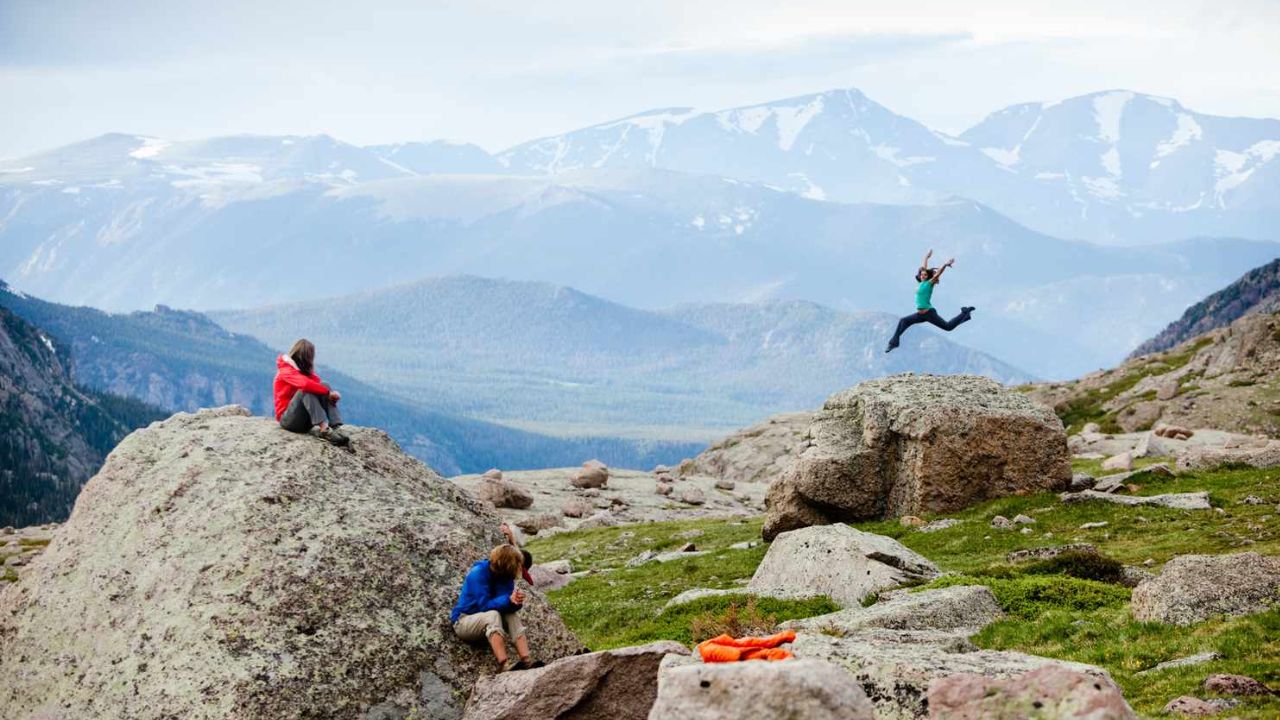
Rocky Mountain is the park for people who want mountains without the commitment of a serious backcountry trip. It is about an hour and a half from Denver, which makes it one of the most accessible major parks in the country.
The park has something for every level of ambition. If you want to stay in your car, Trail Ridge Road takes you above 12,000 feet and gives you views that stretch across the entire state. If you want to walk a little, Bear Lake is a flat quarter-mile loop around a mountain lake that looks like a postcard. If you want more, there are dozens of trails ranging from easy to strenuous. You choose.
Rocky Mountain requires timed entry reservations during the busy season. This is not optional. You will be turned away without one. Plan your visit months in advance. Go early in the morning to beat the crowds and see wildlife. Elk and deer are common near the roads at dawn.
The altitude is real. If you are coming from sea level, you will feel it. Take it easy on your first day. Drink water. Do not try to hike to the top of a fourteener on your first visit. There is no shame in enjoying the park from the best national parks for first time visitors.
You May Also Like: Best Places to Travel Without a Visa in 2026
What to Do Before You Go?
You have picked a park. Now you need to prepare. This is the part most first-timers skip, and it is the part that causes the most problems.
Book your lodging first. National park lodges fill up months in advance. If you cannot get a room inside the park, look for hotels in the gateway towns. They are usually cheaper and have more amenities. Campgrounds are another option, but they also fill up fast. Do not assume you can just show up and find a place to stay.
Check the park website for closures and reservations. Some parks require timed entry permits. Some roads close in winter. Some trails are closed for maintenance or wildlife protection. The information is always available on the National Park Service website. Look at it before you leave home.
Download offline maps. Cell service is unreliable or nonexistent in most parks. You do not want to be lost with no way to figure out where you are. Download the map before you go.
Pack layers. Weather in parks changes fast. A sunny morning can turn into a cold, windy afternoon. Bring a jacket even in summer. Bring comfortable shoes. Bring water. Bring snacks. This is not complicated, but it matters.
The One Thing You Should Not Do
Do not try to see everything. This is the mistake almost every first-timer makes. You look at the map and think, "We can do this trail, then drive to this viewpoint, then hit this other area before lunch." You cannot. Parks are bigger than they look on paper. Driving takes longer than you expect. You will spend your entire trip rushing from one thing to the next and remembering none of it.
Pick one or two things per day. Sit at a viewpoint for twenty minutes instead of five. Take a short hike and actually look at what is around you. The best moments in national parks are usually the quiet ones. A bison walking past your car. The light changing on a canyon wall. A bird you have never seen before. You will miss all of that if you are checking things off a list.
Slow down. You are not on a schedule. You are in a park. That is the whole point.
Final Thoughts
Your first national park does not have to be perfect. It does not have to be the most remote, the most difficult, or the most impressive. It just has to be a place where you can show up, look around, and feel something. The parks on this list will do that for you. They are accessible. They are beautiful. They are forgiving of mistakes. That is what you need right now.